
Better sleep starts with exploring your options.
Discover custom oral appliance therapy for obstructive sleep apnea and connect with a participating dental sleep practice near you.
New to all this? Learn how it works
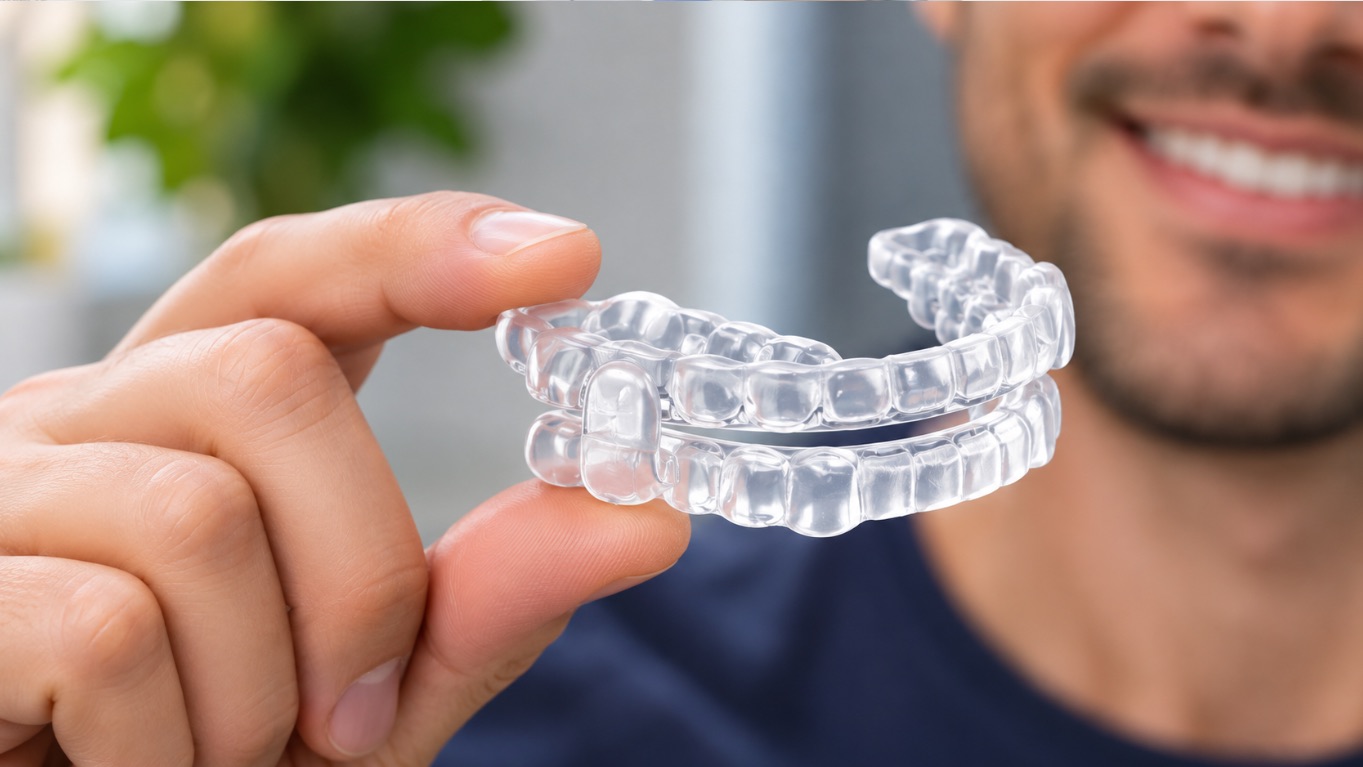
- Made for your teeth. Built from impressions or digital scans, not pulled off a shelf.
- Worn only while you sleep. No mask, hose, or power cord.
- Managed by a dentist. Fitted, adjusted, and checked over time.
Where are you starting from?
I have a sleep apnea diagnosis and CPAP is a struggle.
You are not the only one. For some adults with obstructive sleep apnea, a custom oral appliance may be an option. A dentist trained in dental sleep medicine can tell you whether it fits your situation.
I snore or wake up tired, but I have never been tested.
Sleep apnea is a medical diagnosis, made by a physician after a sleep study. A participating practice can explain how testing works and coordinate with a physician when it is needed.
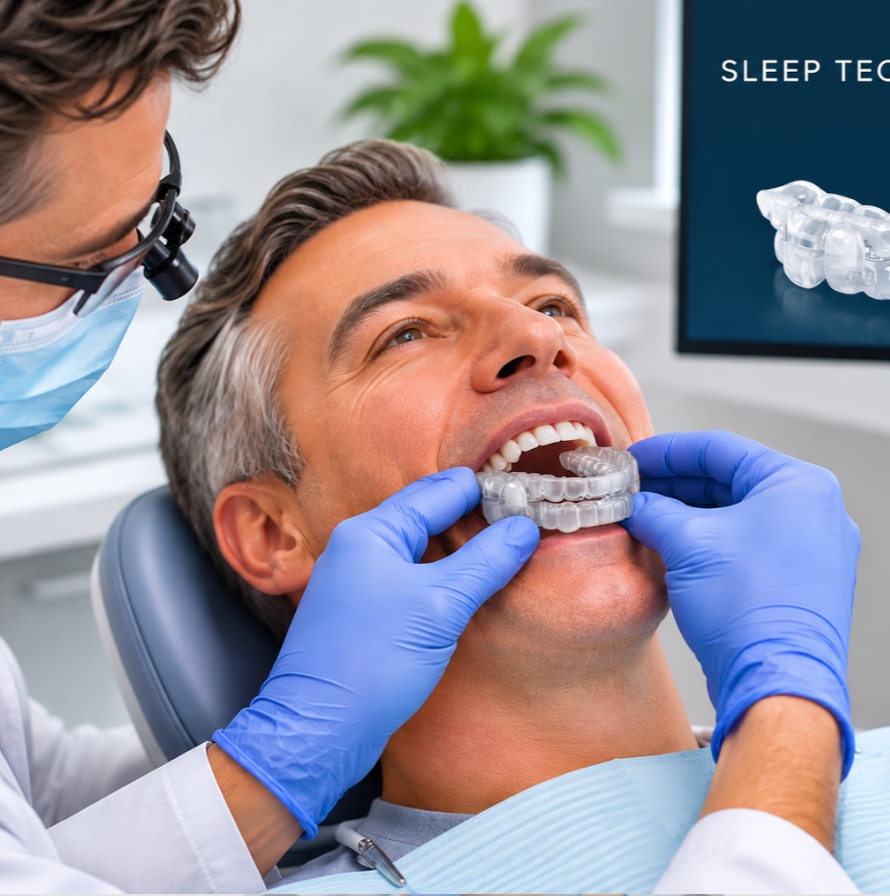
A small device that holds your airway open
Obstructive sleep apnea happens when the soft tissue at the back of the throat relaxes during sleep and narrows or blocks the airway. An oral appliance looks a little like a slim sports mouthguard. It holds the lower jaw slightly forward, which helps keep that space open.
It is a prescription treatment. A physician diagnoses the condition, and a dentist takes impressions or scans, fits the appliance, and fine-tunes its position over several visits.
CPAP and oral appliances, side by side
Both are established treatments. They work differently, and which one suits you is a clinical decision. This is a starting point for that conversation.
| CPAP | Oral appliance | |
|---|---|---|
| How it works | Pressurized air through a mask keeps the airway open | Holds the lower jaw forward to keep the airway open |
| Often recommended for | All severities, including severe sleep apnea | Mild to moderate cases, or adults who cannot tolerate CPAP |
| What you sleep with | Mask, hose, and bedside machine | A fitted appliance over your teeth |
| Travel | Machine and power needed | Fits in a small case |
| Who manages it | Physician or sleep clinic | Dentist, coordinating with your physician |
The honest version
What people tend to like
- Quiet, with nothing to plug in
- Small enough for a carry-on or a nightstand drawer
- Easy to wear in any sleeping position
- Simple daily cleaning
What to know going in
- It is not right for everyone, and CPAP is often more effective for severe sleep apnea
- Jaw or tooth soreness is common in the first weeks
- Your bite can shift gradually with long-term use, so follow-up visits matter
- You need enough healthy teeth to hold the appliance
How it works
1
Learn
Read about oral appliance therapy and what it can and cannot do.
2
Find a practice
Search by ZIP code or city to see participating dental sleep practices.
3
Meet the dentist
A consultation covers your history, your sleep study, and whether an appliance may suit you.
4
Fit and follow up
If you go ahead, the practice fits your appliance and checks on it over time.
What about insurance?
Oral appliance therapy for diagnosed obstructive sleep apnea is often billed to medical insurance rather than dental. Coverage may be available depending on your plan and medical necessity, and it is never guaranteed.
The practice you choose verifies your benefits and explains any costs before treatment begins.
Questions people ask first
Do I need a sleep apnea diagnosis first?
Yes. Obstructive sleep apnea is diagnosed by a physician, usually after a home or in-lab sleep study. If you have not been tested, a participating practice can explain your options and coordinate with a physician.
Can I stop using my CPAP?
Please do not stop any prescribed treatment on your own. Talk with your physician and a dental sleep provider about whether an oral appliance may be appropriate for you.
Is Dental Sleep Connect a dental office?
No. We provide education and help you find independent participating dental practices. The practice you choose provides your care.
Find a participating dental sleep practice
Enter your ZIP code or city to see practices that offer oral appliance therapy consultations.