
Oral appliance therapy for obstructive sleep apnea
A custom-fitted appliance worn during sleep. Here is what it is, how it works, and where its limits are.
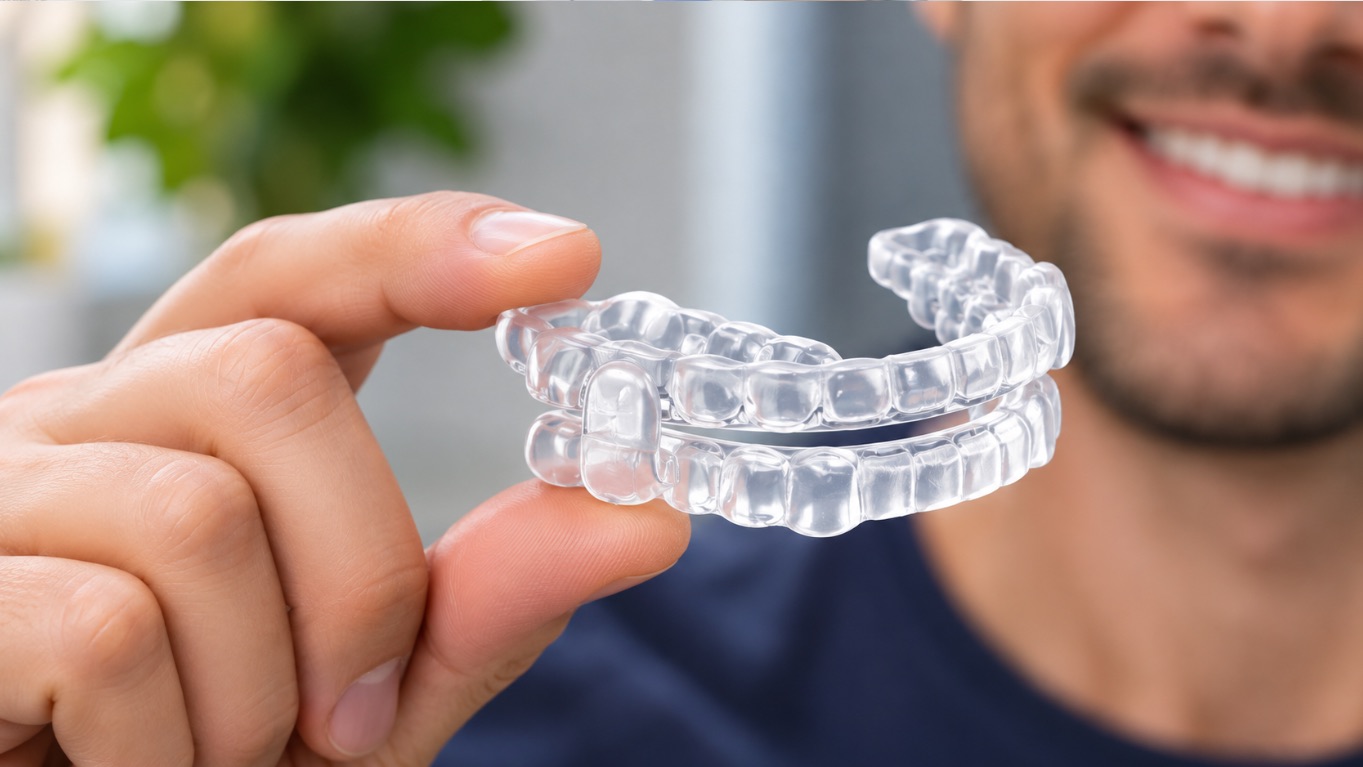
What it is
An oral appliance for sleep apnea is a pair of slim trays, one for the upper teeth and one for the lower, made from impressions or digital scans of your mouth. The most common type is called a mandibular advancement device. “Mandibular” refers to the lower jaw.
It is different from the boil-and-bite guards sold in stores. A custom appliance is prescribed, made by a dental lab to your measurements, and adjusted by a dentist.
How it works
During sleep, the muscles of the throat and tongue relax. In obstructive sleep apnea, that relaxed tissue narrows or closes the airway again and again through the night. The appliance holds the lower jaw a few millimeters forward. Because the tongue is attached to the jaw, it moves forward too, which helps keep the airway behind it open.
The forward position is adjustable. Your dentist changes it in small steps over several weeks to find the setting that helps your breathing while staying comfortable.
Who may be a candidate
It is more often considered when
- You are an adult with diagnosed mild to moderate obstructive sleep apnea
- You have tried CPAP and could not tolerate it
- You and your physician prefer an alternative to CPAP
- You have healthy teeth and gums to anchor the appliance
It may not be suitable when
- Your sleep apnea is severe and CPAP is working or has not been tried
- You have central sleep apnea, which has a different cause
- You have few remaining teeth, advanced gum disease, or loose teeth
- You have significant jaw joint (TMJ) pain or limited jaw movement
Only a clinician who has examined you can say whether an oral appliance is appropriate. This page is general education.
Evaluation, fitting, and follow-up
1
Evaluation
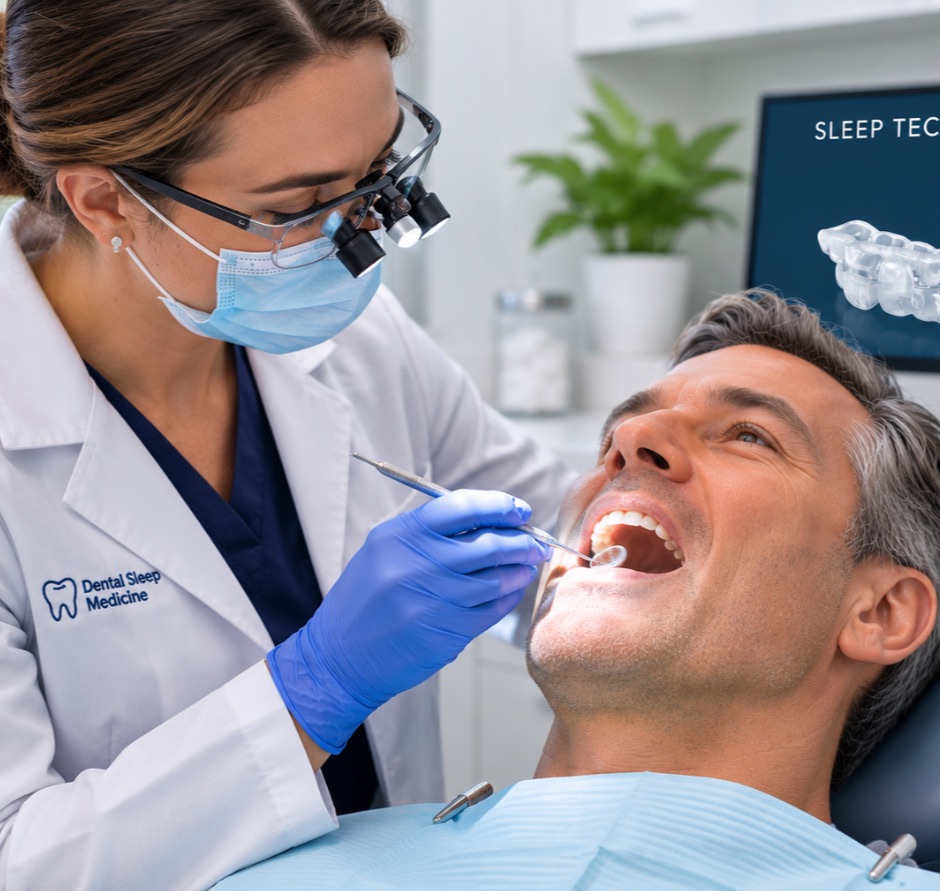
The dentist reviews your sleep study and medical history, and examines your teeth, gums, jaw joints, and airway.
2
Impressions or scans
Records of your teeth and bite are sent to a dental lab that makes the appliance.
3
Fitting
You try the appliance in, learn how to wear and clean it, and start at a comfortable jaw position.
4
Adjustment
Over the following weeks the position is advanced gradually, based on how you feel and sleep.
5
Checking results
A follow-up sleep test, arranged with your physician, is commonly used to confirm how well the appliance is working.
6
Ongoing care
Periodic visits check the fit, your bite, and the condition of the appliance.
Possible side effects and limitations
Most side effects are mild and ease as you adjust, but they are worth knowing about before you start.
- Jaw, tooth, or gum soreness, especially in the morning
- Extra saliva or a dry mouth
- A bite that feels “off” for a short time after you take the appliance out
- Gradual, sometimes permanent, changes in how your teeth meet with long-term use
- Less reduction in breathing events than CPAP for some people, particularly with severe sleep apnea
Tell your dentist about pain that does not settle, and keep your follow-up appointments. Do not stop a prescribed treatment without talking to your clinician.
Talk it through with a dental sleep provider
Search by ZIP code or city to see participating practices.